
Tanzania Travel Resource
Safari Planning Guide
Everything you need to know to plan a safari or Kilimanjaro trek in Tanzania — written by the people who do it every day.
How to Plan a Tanzania Safari: A Complete Guide for First-Time and Returning Travellers
Planning a safari in Tanzania involves more decisions than most travellers expect — when to go, which parks to visit, how many days you need, which accommodation tier fits your style, and how to get the logistics right from overseas. This guide covers the most important questions we hear from clients every week, answered honestly by our team in Arusha.
When to Go on Safari in Tanzania
Tanzania offers excellent wildlife viewing year-round, but the best time depends on what you want to see. The dry season — June to October — is peak safari season. Vegetation is sparse, animals congregate around water sources, and game drives yield exceptional sightings. This is also the best window to witness the Great Wildebeest Migration river crossings in the northern Serengeti.
The short dry season (January to February) is ideal for calving season safaris in the southern Serengeti, when hundreds of thousands of wildebeest give birth and big cats follow. The green season (November to May) offers fewer crowds, lower prices, and stunning landscapes — a great choice for experienced travellers.
For Kilimanjaro trekking, January–March and June–October provide the most stable conditions, though the mountain can be climbed year-round.
Choosing the Right Safari Destinations
Northern Tanzania is home to some of Africa's most iconic wilderness areas. The Serengeti National Park spans nearly 15,000 square kilometres and supports one of the densest predator populations on the continent. Ngorongoro Crater is a UNESCO World Heritage Site and a self-contained ecosystem home to lion, elephant, black rhino, and flamingo.
Tarangire National Park is often overlooked but spectacular — enormous elephant herds, ancient baobab trees, and reliable game viewing even in the wet season. Lake Manyara is compact but diverse, famous for tree-climbing lions and vast flocks of flamingos on the alkaline lake shore.
For mountain travellers, Kilimanjaro at 5,895 metres is Africa's highest peak, and Mount Meru at 4,566 metres offers a quieter, technically rewarding alternative.
Safari Group Sizes and Private vs Group Tours
The number of people in your vehicle directly affects your safari experience. Amani Expeditions operates private safaris in dedicated 4×4 Land Cruisers — you never share your vehicle with strangers. This means you control your pace, your game drive hours, and your photography stops.
Private safaris are ideal for families, couples, honeymooners, and travellers with specific wildlife interests. Small group safaris (2–6 people) can reduce per-person costs while still maintaining a high-quality experience. We do not operate large group tours or mix clients from different bookings into shared vehicles.
For Kilimanjaro and Meru treks, private climbs are standard — your climbing team, your schedule, and your summit window.
What to Expect on a Safari Game Drive
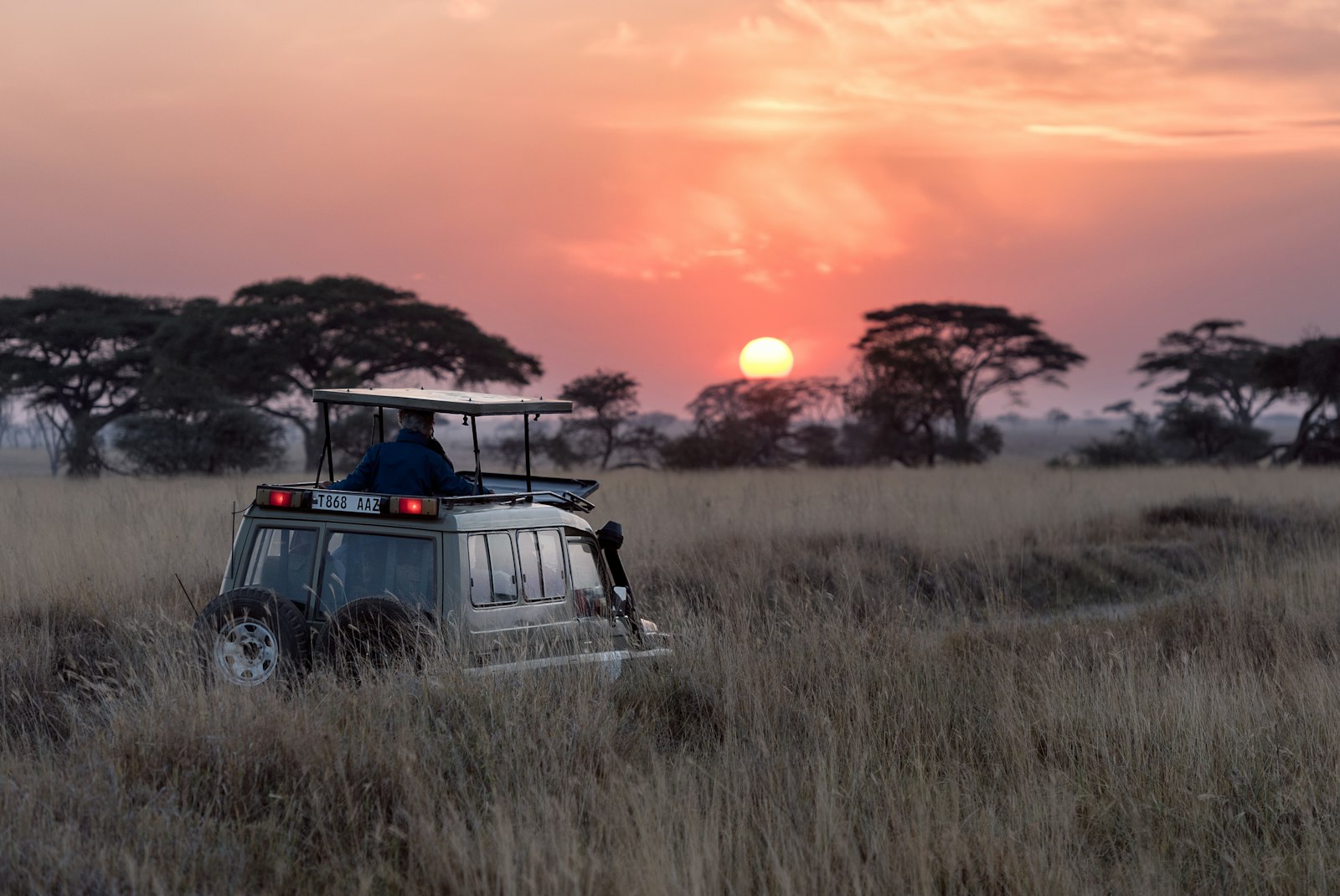
A typical safari day begins before sunrise. You will leave camp or lodge in your Land Cruiser for an early morning game drive when predators are most active and the light is at its most beautiful. After a mid-morning break, you may return for lunch and a rest during the hottest hours, then head back out for a late afternoon drive as temperatures cool.
Your TANAPA-certified guide will track animal movements, read the landscape, and position the vehicle for optimal sightings. Game drives in the Serengeti and Ngorongoro can yield sightings of the Big Five — lion, leopard, elephant, buffalo, and rhino — along with cheetah, wild dog, giraffe, zebra, crocodile, and hundreds of bird species.
Kilimanjaro Trekking — What You Need to Know
Mount Kilimanjaro is the world's tallest freestanding mountain and Africa's highest peak at 5,895 metres (Uhuru Peak). No technical climbing experience is required, but physical fitness, mental resilience, and proper acclimatisation are essential for a successful summit.
The most popular routes are the Machame Route (6–7 days, scenic and challenging), the Lemosho Route (7–8 days, excellent acclimatisation profile), the Rongai Route (7 days, quieter northern approach), and the Marangu Route (5–6 days, the only hut-to-hut route). Amani carries supplemental oxygen on all climbs and our guides are trained in wilderness first aid and altitude recognition.
Summit success rates depend heavily on route selection and number of days. We recommend at least 7 days on any route to allow proper acclimatisation.
Safety, Insurance, and What to Pack
Your safety is not an afterthought — it is built into every element of how we operate. Our 4×4 Land Cruisers are regularly serviced and carry first aid kits. On Kilimanjaro, we carry supplemental oxygen and pulse oximeters and monitor every client daily for signs of altitude sickness. We will always descend a client if safety demands it — no summit is worth a life.
We strongly recommend comprehensive travel insurance that covers emergency evacuation and trip cancellation. For safari, pack light layers (mornings are cool, afternoons are warm), a wide-brim hat, quality sunscreen, insect repellent, and binoculars. For trekking, quality hiking boots, thermal base layers, a down jacket, and a good sleeping bag rated to -10°C are essential.